
News

Transformer Condition Monitoring and Fault Diagnosis

Through the comparison of the advantages and disadvantages of the current maintenance and testing system methods, the significance of developing and applying the transformer power equipment condition monitoring and fault diagnosis technology is analyzed, the current transformer detection and fault diagnosis technology is studied, and the existing problems and development prospects of this technology are introduced.

  Introduction

  As the power load gradually increases, the stability requirements of the power system are increasing, and the condition monitoring and fault diagnosis technology of transformer electrical equipment has received increasing attention. More and more research and production departments are actively developing and applying this technology, and there is a comprehensive promotion trend. In this case, a comprehensive, objective and in-depth understanding of the technology, understanding its current technical status, and comparing and understanding its advantages and disadvantages and relationship with the current preventive maintenance system will be of some significance for the correct development and application of this new technology and better protection of the reliability and safety of power production.

  1. The importance of condition monitoring and fault diagnosis technology

  Transformers are important power equipment that connect power generation, transmission and distribution. With the development of the economy, the increase of power load and voltage level, the reliability of transformer operation has a more obvious impact on the stability of the power system. When a transformer is in operation, it is affected by various factors such as electricity, heat, machinery, and environment. Its performance will gradually deteriorate, and its operating state will deteriorate, which may lead to various failures.

  In order to minimize and avoid the occurrence of faults, the traditional practice of the power system for a long time is to continuously study and summarize, and implement various effective regular preventive tests and maintenance methods. Compared with the maintenance of accidents, this preventive test and maintenance method has essential progress. However, there is blindness in regular planned maintenance, and most of the preventive tests are carried out offline. During the test, the machine needs to be shut down and the power needs to be cut off, resulting in economic losses. For some important equipment, it cannot be easily shut down, making it difficult to complete the regular test. Even if the equipment to be inspected can be shut down, the test results are often deviated due to the difference between the state of the transformer during operation and after the shutdown. On the other hand, inspection and maintenance may cause excessive maintenance and damage to the performance of the transformer.

  2. Transformer condition monitoring and fault diagnosis

  Transformer fault diagnosis technology has changed from a time-based approach to a state-based approach. Its content includes two aspects: condition monitoring and fault diagnosis: the former provides maintenance basis for state maintenance by extracting fault characteristic signals, while the latter analyzes and processes the collected state information. The research on transformer online monitoring technology generally includes the following contents: (1) fault mechanism analysis; (2) online monitoring means; (3) transmission, processing and storage of monitoring information; (4) extraction of fault characteristic quantity; (5) fault diagnosis methods and theoretical analysis.

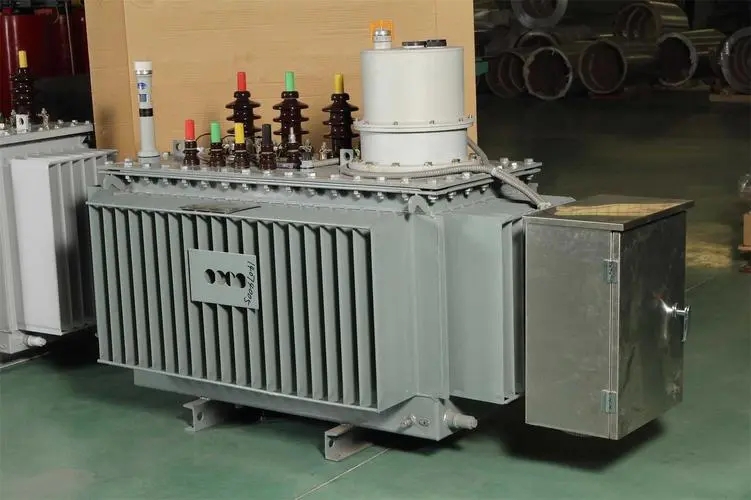
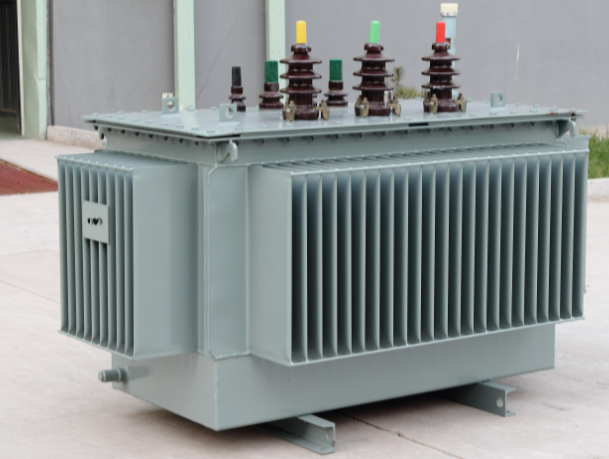
  The power industry mainly uses oil-filled transformers, and dry-type transformers or sulfur hexafluoride transformers are also used in some special occasions. At present, partial discharge monitoring and ultrasonic positioning technology, infrared technology, and micro-water analysis technology are mostly used for transformer condition monitoring at home and abroad. For high-voltage bushings of transformers, digital online measurement technology of dielectric loss factor is usually used. For on-load voltage regulating switches with many faults, on-load fault diagnosis online devices are used to measure touchpoint wear and mechanical and electrical circuits. In addition, parameters such as oil temperature, turn winding temperature, load current and voltage, and cooling pump fan operation are also monitored. Transformer status monitoring involves the main components of the transformer: magnetic circuit windings and insulation of fixed insulating liquids, gas insulation and cooling systems. The faults to be diagnosed are: overheating fault, discharge fault, overheating and discharge fault, mechanical fault and water ingress dampness, etc. The commonly used partial discharge monitoring and diagnosis method mostly uses the electric pulse signal generation method and the ultrasonic method. The ideal quantitative and positioning effect of the joint detection of electrical and acoustic signals can be judged according to the apparent discharge power, distribution pattern and the positioning of the discharge power source. The analysis of dissolved gas component content (DGA) in oil is firstly based on the principle of dissolution equilibrium. Various principles are used for degassing, such as vacuum, permeable membrane, gas elution, etc. The gas in the oil is removed, and then separated by a separation column. Then the different component gases are monitored by detectors (such as TCD, FID, etc.), or sensors of various principles. After that, according to the common component ratio method at home and abroad or multi-dimensional graphic method, combined with the results of electrical tests and offline regular tests, latent faults are comprehensively analyzed and diagnosed. Recently, technologies such as composite permeable membrane electrochemical/fuel cell infrared monitoring have been developed to analyze the content of dissolved gas components in oil. Since the accuracy of DGA analysis and judgment has been recognized at home and abroad, this technology has become a research hotspot in various countries.


Contact Us

Be the first to learn about our new product launches and the latest news articles.
So-and-so Industrial Equipment Co., Ltd. is an emerging enterprise specializing in environmental protection technical services such as frequency conversion water supply, environmental protection equip...

Do you have any questions or requests?

Click below and we'd be happy to assist. Contact

Copyright © 2012-202X Industrial Equipment Co., Ltd. All rights reserved
We use cookie to improve your online experience. By continuing to browse this website, you agree to our use of cookie.

Cookies

Please read our Terms and Conditions and this Policy before accessing or using our Services. If you cannot agree with this Policy or the Terms and Conditions, please do not access or use our Services. If you are located in a jurisdiction outside the European Economic Area, by using our Services, you accept the Terms and Conditions and accept our privacy practices described in this Policy.
We may modify this Policy at any time, without prior notice, and changes may apply to any Personal Information we already hold about you, as well as any new Personal Information collected after the Policy is modified. If we make changes, we will notify you by revising the date at the top of this Policy. We will provide you with advanced notice if we make any material changes to how we collect, use or disclose your Personal Information that impact your rights under this Policy. If you are located in a jurisdiction other than the European Economic Area, the United Kingdom or Switzerland (collectively “European Countries”), your continued access or use of our Services after receiving the notice of changes, constitutes your acknowledgement that you accept the updated Policy. In addition, we may provide you with real time disclosures or additional information about the Personal Information handling practices of specific parts of our Services. Such notices may supplement this Policy or provide you with additional choices about how we process your Personal Information.


Cookies

Cookies are small text files stored on your device when you access most Websites on the internet or open certain emails. Among other things, Cookies allow a Website to recognize your device and remember if you've been to the Website before. Examples of information collected by Cookies include your browser type and the address of the Website from which you arrived at our Website as well as IP address and clickstream behavior (that is the pages you view and the links you click).We use the term cookie to refer to Cookies and technologies that perform a similar function to Cookies (e.g., tags, pixels, web beacons, etc.). Cookies can be read by the originating Website on each subsequent visit and by any other Website that recognizes the cookie. The Website uses Cookies in order to make the Website easier to use, to support a better user experience, including the provision of information and functionality to you, as well as to provide us with information about how the Website is used so that we can make sure it is as up to date, relevant, and error free as we can. Cookies on the Website We use Cookies to personalize your experience when you visit the Site, uniquely identify your computer for security purposes, and enable us and our third-party service providers to serve ads on our behalf across the internet.

We classify Cookies in the following categories:
 ●  Strictly Necessary Cookies
 ●  Performance Cookies
 ●  Functional Cookies
 ●  Targeting Cookies


Cookie List
A cookie is a small piece of data (text file) that a website – when visited by a user – asks your browser to store on your device in order to remember information about you, such as your language preference or login information. Those cookies are set by us and called first-party cookies. We also use third-party cookies – which are cookies from a domain different than the domain of the website you are visiting – for our advertising and marketing efforts. More specifically, we use cookies and other tracking technologies for the following purposes:

Strictly Necessary Cookies
These cookies are necessary for the website to function and cannot be switched off in our systems. They are usually only set in response to actions made by you which amount to a request for services, such as setting your privacy preferences, logging in or filling in forms. You can set your browser to block or alert you about these cookies, but some parts of the site will not then work. These cookies do not store any personally identifiable information.

Functional Cookies
These cookies enable the website to provide enhanced functionality and personalisation. They may be set by us or by third party providers whose services we have added to our pages. If you do not allow these cookies then some or all of these services may not function properly.

Performance Cookies
These cookies allow us to count visits and traffic sources so we can measure and improve the performance of our site. They help us to know which pages are the most and least popular and see how visitors move around the site. All information these cookies collect is aggregated and therefore anonymous. If you do not allow these cookies we will not know when you have visited our site, and will not be able to monitor its performance.

Targeting Cookies
These cookies may be set through our site by our advertising partners. They may be used by those companies to build a profile of your interests and show you relevant adverts on other sites. They do not store directly personal information, but are based on uniquely identifying your browser and internet device. If you do not allow these cookies, you will experience less targeted advertising.

How To Turn Off Cookies
You can choose to restrict or block Cookies through your browser settings at any time. Please note that certain Cookies may be set as soon as you visit the Website, but you can remove them using your browser settings. However, please be aware that restricting or blocking Cookies set on the Website may impact the functionality or performance of the Website or prevent you from using certain services provided through the Website. It will also affect our ability to update the Website to cater for user preferences and improve performance. Cookies within Mobile Applications

We only use Strictly Necessary Cookies on our mobile applications. These Cookies are critical to the functionality of our applications, so if you block or delete these Cookies you may not be able to use the application. These Cookies are not shared with any other application on your mobile device. We never use the Cookies from the mobile application to store personal information about you.

If you have questions or concerns regarding any information in this Privacy Policy, please contact us by email at . You can also contact us via our customer service at our Site.


WhatsApp avatar

Click to Chat.

Im online now.

Hey, my name is Tim. how can I assist you today?

WhatsApp Us

WhatsApp us